





When the music plays at the end of ninth period, most students head home.
But if you stay on campus a little longer and walk past the gym hallway, you’ll hear the sounds of our student athletes finishing another practice.
Whether you notice their names over the loudspeakers or know someone on a team, it’s obvious they keep packed schedules.
Between late practices, demanding classes, and the clubs many of them attend or run, student athletes are often some of the busiest people in the building.
Despite that reality, the media stereotype still paints them as “dumb jocks” who don’t care about academics—a picture that doesn’t match what actually happens here.
For years, young-adult TV shows have pushed the idea of the one-dimensional jock. In reality, student athletes regularly disprove this. A study from StatCrunch found that student athletes average GPAs around 3.7.
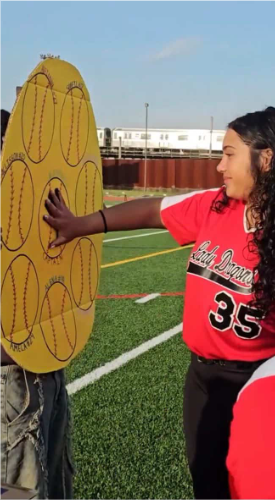
Such as senior Nyomi Cadet, captain of the girls lacrosse team and a four-year volleyball player.
She breaks the stereotype completely, excelling academically with a 3.9 GPA while serving as Student Council president. Cadet and many others balance sports and school with impressive discipline.
Cadet’s experience highlights what sports actually teach. A junior varsity volleyball player for a year before moving up to varsity, says athletics help her confront self-doubt and build confidence. “I learned how to work around conflict and how to be forgiving with yourself,” Cadet states. Being on a team also taught her to support others instead of being overly hard on herself.
Her strong academics—maintaining a 3.9 GPA—come from the same structure and determination that guide her through sports. Her favorite memories aren’t the wins but the small moments, like bus rides where she bonded with teammates.
The emotional strength she builds on the court carries into late-night assignments and challenging classes. As she puts it, “People think that because we play sports, that’s the only thing that matters, but we are so much more than that.”
Graduated athletes share the same view. Katherine Moy, a former lacrosse player, left sports in college but says the experience shaped her in meaningful ways. She appreciated the supportive team environment—“nobody really judged anyone for messing up,” Moy said.
Her senior year, she and Cadet were the only returning players, forcing her into a leadership role. “My senior year it was all rookies except me and Cadet, and I had to learn how to train them.” She felt the pressure to keep her grades up but also saw how hard many work academically. Now active in clubs and her campus newspaper, she says lacrosse taught her “how to be involved and committed to something,” and she appreciated that “everybody had the same goal—to win.”
Teachers see this firsthand. AP World History and The Past as Present: The World Since 1900 teacher, Mr.Barkley, while coaching the girls varsity soccer team, has spent a decade watching athletes debunk the “dumb jock” myth.
He played football for two years in high school, but coaching has shown him a wider range of personalities, students who, as he puts it, “never would have crossed paths if not for soccer.”
He sees his athletes grow from single-sport kids into well-rounded students who juggle clubs, rigorous courses, and multiple sports. Many take AP and honors classes and bring motivation and maturity from sports into academics. “Good students make the best athletes,” Mr. Barkley said. “You have to be a good listener, a hard worker, dedicated—all of those things translate.” Athletes, he adds, understand that “You can’t walk into your first practice and be Megan Rapinoe [former National Women’s Soccer League and U.S Women’s National team player].”
Pre-AP History and Western Civilization teacher, Mr.Callis, sees the same pattern. Athletes are often the most organized voices in the classroom. “Athletes are often the ones who tell me ahead of time if there’s a game or conflict,” Mr. Callis said. “They’re really good at planning around their responsibilities.” What he sees is professionalism: students who manage complex schedules, communicate clearly, and protect their commitments.
Their challenges aren’t about intellect but time. Still, he says, they hold strong academically thanks to structure and accountability.
The skills they bring from the field—leadership, collaboration, confidence doesn’t fade when the bell rings. For teachers like Callis, student athletes aren’t exceptions- they’re proof the stereotype was never true.