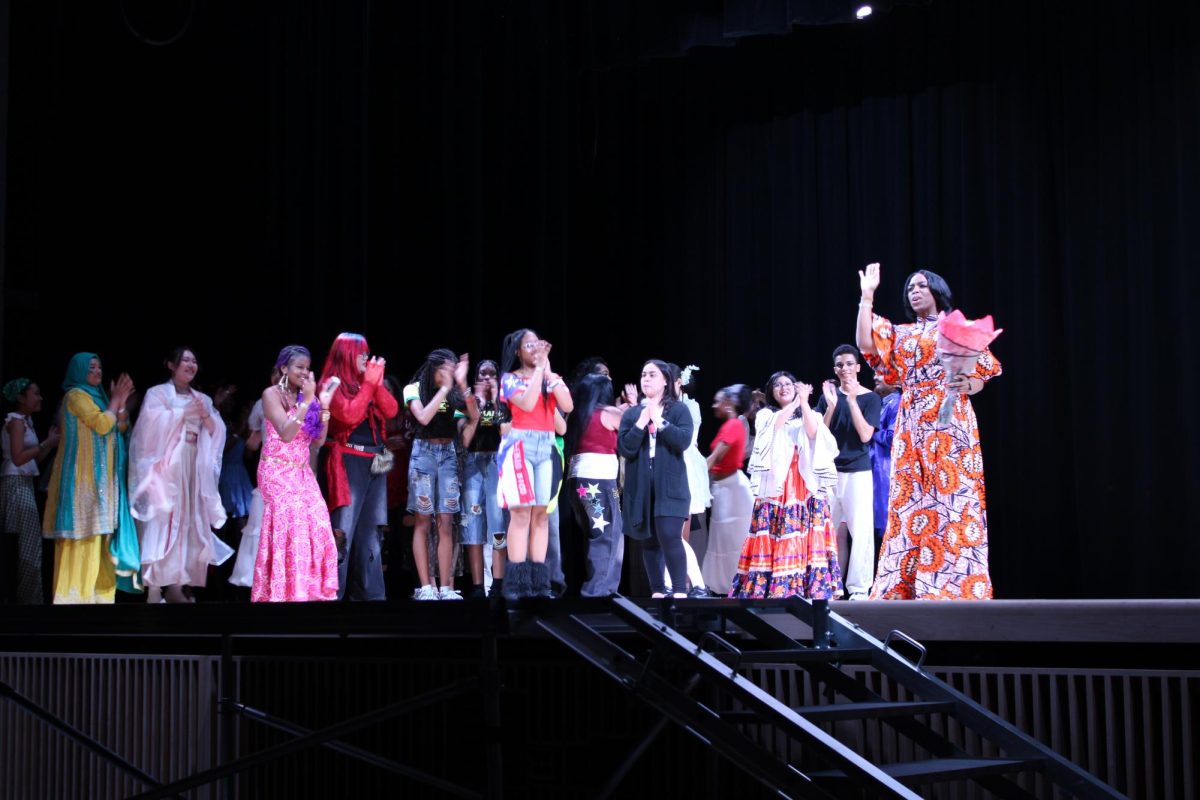





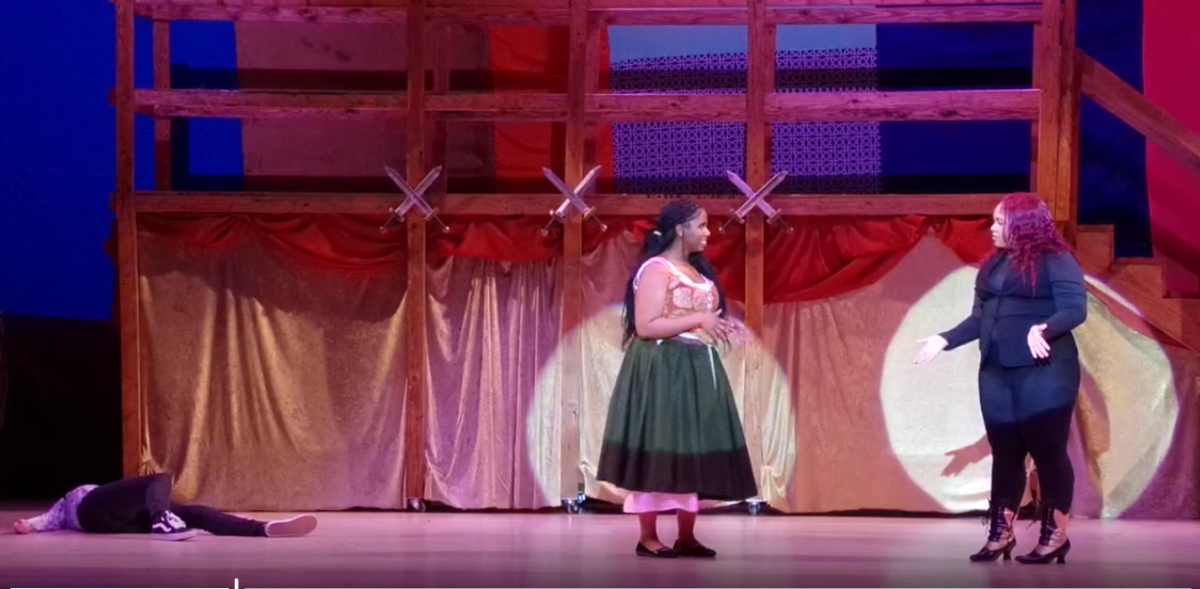
This April, the John Dewey theater team put on a production of the 1972 play “Pippin”, originally written by Steven Schwartz, and this production being directed by Dewey theater teacher Madelynne Appleton.
The Play follows the titular Pippin, a prince searching, but failing to find a calling in life that would bring him greatness and meaning, this character and story are based on the life of the historical Pepin the hunchback, a Frankish prince, but the play is so thoroughly fictionalized that the two bear little to no actual resemblance.
The most iconic facet of the play are the frequent fourth wall breaks, with the characters acknowledging that they are in a play and the supporting cast oftentimes egging on the lead into being more dramatic to appease the audience.
This blurring of barrier between the actors and audience, among others factors is why this play was chosen to be produced. “The singing and choreography was really out there and interactive, with the actors going out in the audience,” says Ms. Appleton. “It had a good range of characters, and the ensemble can be as big or small as you need.”
The play’s eccentricities provided an interesting challenge to the actors, and the fluid ensemble allows for a production to adapt to whatever number of actors is wanted.
The play’s major productions have been nominated, and have won numerous awards, including multiple Tony awards.
So what makes John Dewey’s production stand out from the rest? Appleton provides this question with a succinct answer, saying “It’s the kids, they really put their heart into it”.
One of Appleton’s students and a lighting tech on the production, senior Ray Capitulo shared one of the ways in which the students made the play their own. “I liked how the lighting turned out,” Capitulo said. “I was one of two people doing it, we only had a little guidance from Appleton, the director, so it was up to us to decide what the lighting would be like- should it be soft or dramatic, who we should focus on, that sort of thing.”
With many of the others involved in the production having this sort of freedom, it’s sure that the production was not like any other.
However, something that Appleton and Capitulo agreed upon was that the stage and its equipment were very restricting, with it being the biggest problem faced by the production. “The stage was really limiting, there was a lot we had to work around,” said Appleton, with Capitulo giving a more granular perspective of the problem, saying “There were only two spot lights, deciding who to spotlight, holding up the lights, it was really difficult, it felt like I was growing muscle while standing up there.”
Pippin ends with the lead realizing that he doesn’t need riches, glory or greatness to have a happy and fulfilling life. With this in mind, it’s clear to see that this production didn’t need to have a fully outfitted stage with top of line equipment or award winning performances to still be meaningful and fulfilling to those that produced and experienced it.